Create a clear route through the space
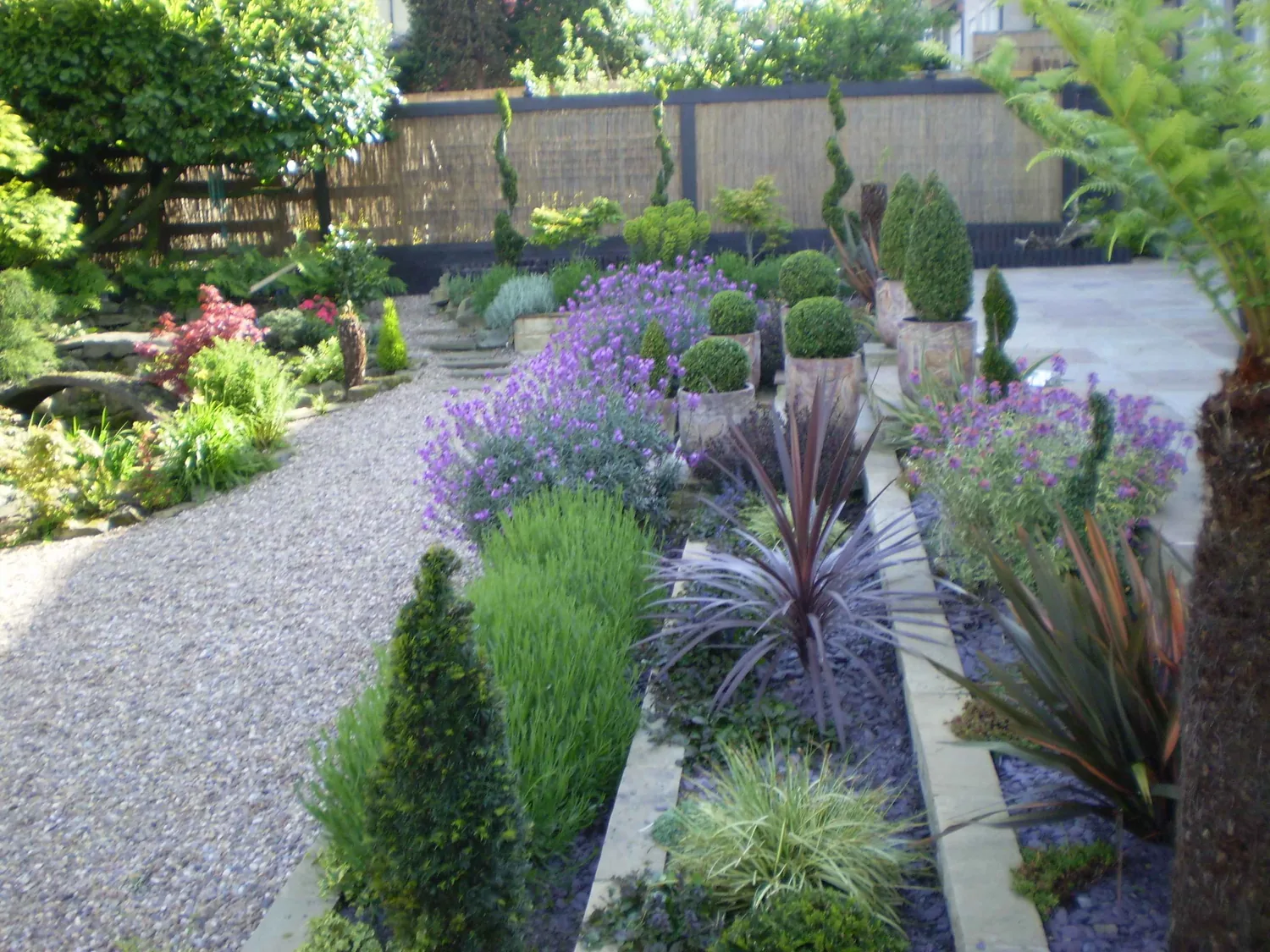
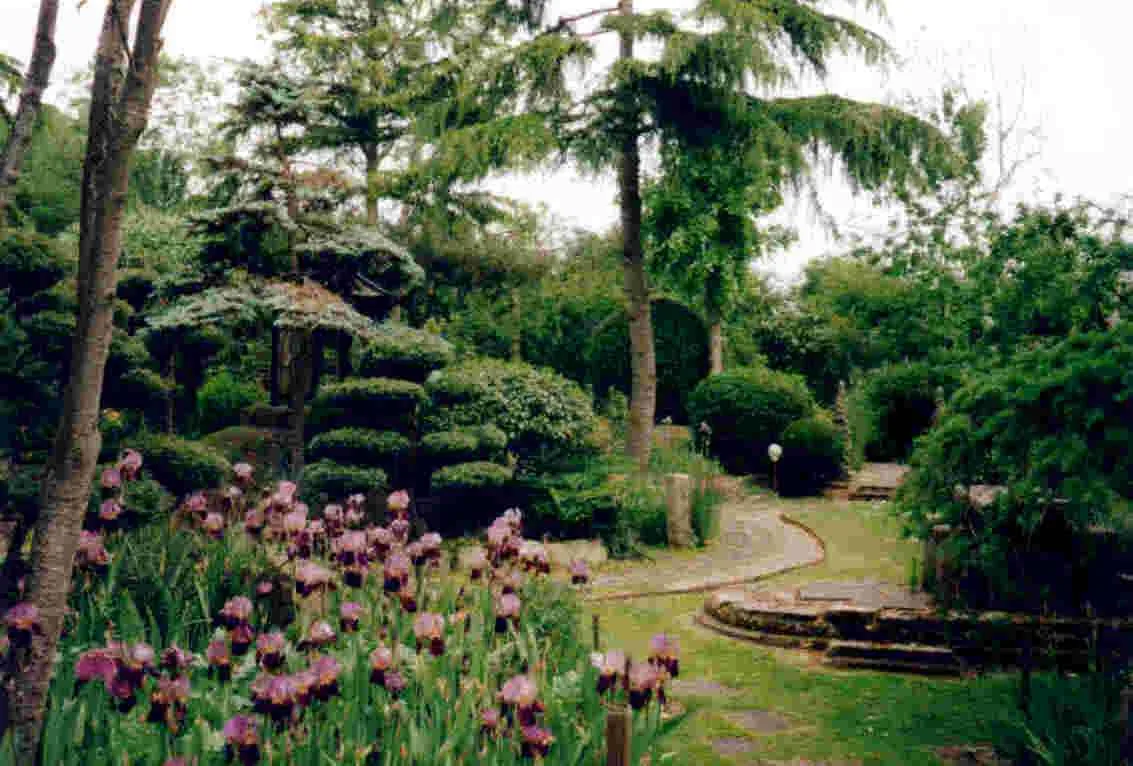
Paths and stepping areas are practical, but they also control how the garden is seen. A slight curve can reveal planting gradually; a straight line can make a focal point feel stronger.
Repeat plants and materials
Repetition gives a garden visual rhythm. Use the same plant in several areas, repeat a paving material or carry the same container finish through the space. This creates continuity even when the planting is diverse.
Photograph the garden from the main window as well as from outside. The view from indoors matters because that is often how the space is seen for much of the year.
Place decorative objects with purpose
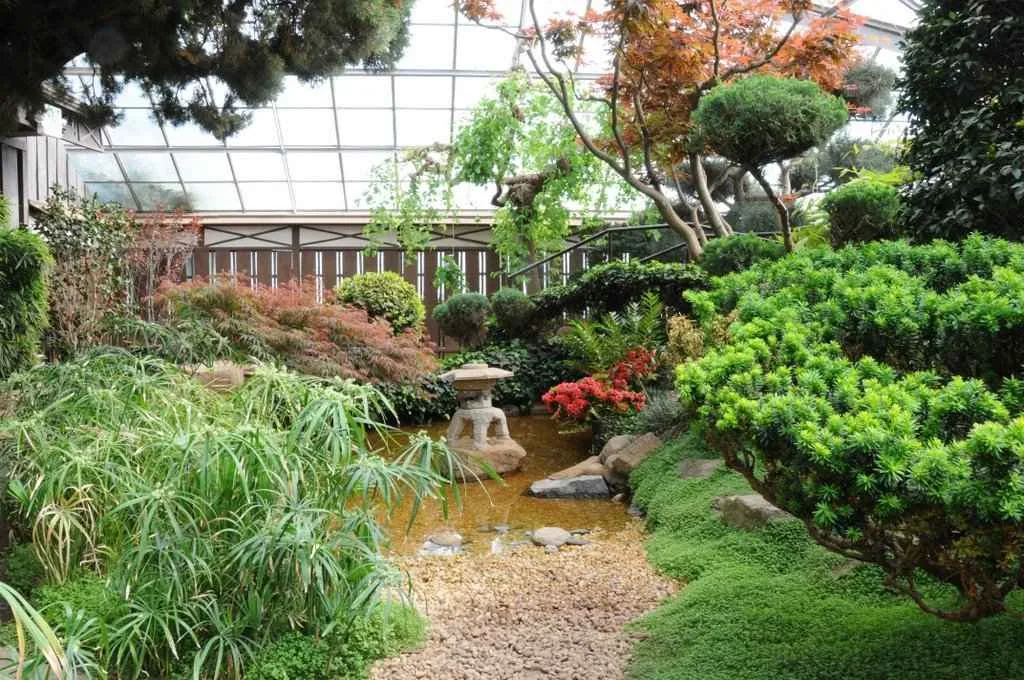
A bench, sculpture, birdbath or large planter works best when it marks a destination, terminates a view or balances an empty area. Random objects distributed evenly through the garden can dilute the landscape.
Think beyond one season
Evergreen structure, bark, grasses, seed heads and lighting can keep an outdoor space visually interesting when flowers are not in bloom. Seasonal decoration then becomes an accent rather than the entire design.
Place lighting where it reveals texture and depth. Grasses, tree trunks, walls and layered foliage often become more interesting at night than brightly lit flower beds.
Gardens change after sunset, so lighting deserves its own plan. Low path lights, subtle uplighting on foliage and warm light near seating are usually more effective than one bright fixture. The goal is orientation and atmosphere, not turning the garden into daylight.
Create evening atmosphere
Use hardscape sparingly but consistently. Repeating the same gravel, timber, stone or metal finish across edging, paths and containers helps unrelated planting areas feel connected.
Think about what the garden looks like from inside the house, from the patio and while walking through it. A bench, specimen plant, sculpture or small tree can terminate a view and give the eye a destination. These sightlines make even compact gardens feel more deliberate.
Design views as well as planting beds
Ideas gallery
Use these images as starting points for proportion, placement, colour and composition rather than instructions to copy every detail.